> For the complete documentation index, see [llms.txt](https://docs.flydean.com/www.flydean.com/llms.txt). Markdown versions of documentation pages are available by appending `.md` to page URLs; this page is available as [Markdown](https://docs.flydean.com/www.flydean.com/docs/spring/01-springbase/00005-spring5-reference-ioc.md).
# 5. Spring中的IOC容器
最近在翻译[Spring Framework Documentation 5.1.8.RELEASE](https://github.com/ddean2009/Spring-Framework-Documentation). 觉得还是可以系统的将Spring5的知识点系统的再整理一下,于是有了这个Spring5参考指南系列,教程会一直更新,翻译也会同步进行,敬请期待。
## 为什么使用Spring5
Spring经过这么多年的发展,已经成为既定的企业级J2EE标准,其最大的优点即是轻量级和其最核心的IOC容器。 Spring最新的版本已经到了5.1.8,Spring5提供了很多新的特性,个人认为最主要的有3点:
* 使用JDK8的新特性 最引人注意的是Spring5使用了JDK8中的lambda表达式,让代码变得更加简洁。
* 响应式编程支持 响应式编程是Spring5中最主要的特性之一,响应式编程提供了另一种编程风格,专注于构建对事件做出响应的应用程序。 Spring5 包含响应流和 Reactor。
* 响应式web框架 Spring5提供了一个最新的响应式Web框架,Spring WebFlux,在编程理念和使用习惯方面和之前的传统Web框架都有了很大的区别。
当然,我们要拥抱新技术新变化,那么快来学习Spring5吧。
## 什么是IOC容器
IOC也称为依赖注入(DI)。它是指对象仅通过构造函数参数、工厂方法的参数或从工厂方法构造或返回对象实例后,通过在其上设置的属性来定义其依赖项(即与之一起工作的其他对象)的过程。
简单点说就是通过配置的参数来构造对象,然后通过配置的属性来实例化其依赖对象。一切都是通过配置来完成的,而不是使用通常的Java new方法来创建对象,也不需要手动去查找或者实例化其依赖对象,一切的一切都是通过Spring IOC容器来实现的。
IOC容器的两个主要包是:org.spring framework.beans和org.springframework.context包。
如果想使用IOC容器,下面两个依赖是必须的:
```xml
org.springframework
spring-core
5.1.8.RELEASE
org.springframework
spring-context
5.1.8.RELEASE
```
IOC容器中有两个非常重要的类:BeanFactory和ApplicationContext。
ApplicationContext是BeanFactory的子类,BeanFactory提供了对Bean的操作接口,ApplicationContext则是表示容器本身,提供了bean操作之外的如AOP接入,事件处理,消息资源接入和应用程序上下文等非常有用的特性。
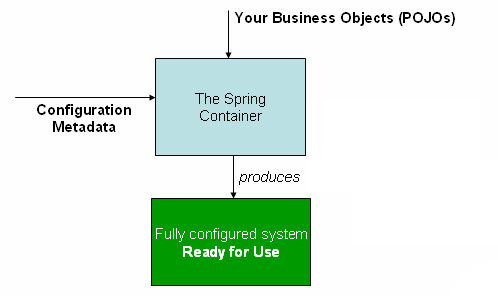
org.springframework.context.ApplicationContext接口代表着SpringIOC容器,它负责实例化、配置和组装bean。容器通过读取配置元数据获取关于要实例化、配置和组装的对象的指令。配置元数据以XML、Java注释或Java代码来表示。它定义了组成应用程序的对象以及这些对象之间的丰富依赖关系。
如果你是创建一个单体应用,那么Spring提供了两个非常有用的ApplicationContext实现,ClassPathXMLApplicationContext或FileSystemXMLApplicationContext。
ClassPathXMLApplicationContext是从类路径去加载要装载的配置,FileSystemXMLApplicationContext是从文件路径去装载。
你只需要在配置中,定义你需要使用的业务对象(POJO),在创建和初始化ApplicationContext之后,您就拥有了一个完全配置且可执行的系统或应用程序.
## 配置元数据
配置配置,Spring的本质就是通过配置来展示和构建业务对象,通常来说,我们可以使用XML文件来配置,当然现在我们也可以使用Java注解和Java代码来实现。
Spring配置由容器必须管理的至少一个或多个bean定义组成。基于XML的配置元数据通常使用来表示。Java配置通常在@Configuration中使用@bean注解的方法。
下面是一个基本的基于XML的定义 daos.xml:
```xml
```
其中id是bean的唯一标记,class是bean的类路径。
## 实例化容器
Spring容器有很多种实例化方法,比如上面讲的单体应用的两个类:
```java
ApplicationContext context = new ClassPathXmlApplicationContext("services.xml", "daos.xml");
```
上面已经列出了daos.xml , 这里我们再列出services.xml :
```xml
```
service.xml 里面主要定义了对在定义在daos.xml中的bean的引用。这里的引用方式是通过ref. ref引用了daos.xml里面bean的id。
## XML嵌套
除了上面例子中在创建ApplicationContext的时候,加载多个xml文件,其实我们也可以在xml中通过import来引入其他的xml文件。
```xml
```
resource配置的是要引入的xml的路径,可以使用相对路径和绝对路径。不建议使用相对路径“..”来引用父目录中的文件。这样做会创建对当前应用程序外部文件的依赖关系。直接使用绝对路径又会影响不同部署环境下文件路径的位置。所以比较好的方法是在运行时根据JVM系统属性解析的“$…”占位符。
## groovy bean定义DSL
除了xml定义,Spring也可以使用groovy bean来配置。
下面是daos.groovy的定义:
```java
import com.flydean.daos.JpaAccountDao;
import com.flydean.daos.JpaItemDao;
beans{
accountDao(JpaAccountDao){
}
itemDao(JpaItemDao){
}
}
```
很简单,就是定义了2个bean。
下面是services.groovy的定义:
```java
import com.flydean.services.PetStoreService
beans {
petStore(PetStoreService, accountDao){
accountDao=accountDao
itemDao=itemDao
}
}
```
## 使用容器
ApplicationContext是高级工厂的接口,它能够维护不同bean的注册及其依赖。通过使用方法T getBean(String name, Class requiredType),获取到bean的实例。 ApplicationContext允许您读取bean定义并访问它们,如下例所示:
```java
// create and configure beans
ApplicationContext context = new ClassPathXmlApplicationContext("services.xml", "daos.xml");
// retrieve configured instance
PetStoreService service = context.getBean("petStore", PetStoreService.class);
// use configured instance
List userList = service.getUsernameList();
```
上面讲到了groovy bean配置, 下面是怎么使用groovy bean:
```java
// create and configure beans with groovy
//daos.groovy 必须写在services.groovy前面,否则会报bean找不到的错误
ApplicationContext context = new GenericGroovyApplicationContext("daos.groovy","services.groovy");
// retrieve configured instance
PetStoreService service = context.getBean("petStore", PetStoreService.class);
// use configured instance
List userList = service.getUsernameList();
```
使用groovy的时候请注意, daos.groovy 必须写在services.groovy前面,否则会报bean找不到的错误。
还可以使用XmlBeanDefinitionReader和GenericApplicationContext结合的方式:
```java
GenericApplicationContext context = new GenericApplicationContext();
//reader with xml
new XmlBeanDefinitionReader(context).loadBeanDefinitions("services.xml", "daos.xml");
```
你也可以使用GroovyBeanDefinitionReader来加载Groovy文件,如下所示:
```java
GenericApplicationContext context = new GenericApplicationContext();
new GroovyBeanDefinitionReader(context).loadBeanDefinitions("services.groovy", "daos.groovy");
```
本教程的源代码可以参照:[spring5-core-workshop](https://github.com/ddean2009/spring5-core-workshop) 中的container模块。
更多教程请参考 [flydean的博客](http://www.flydean.com/spring5-reference-ioc/)